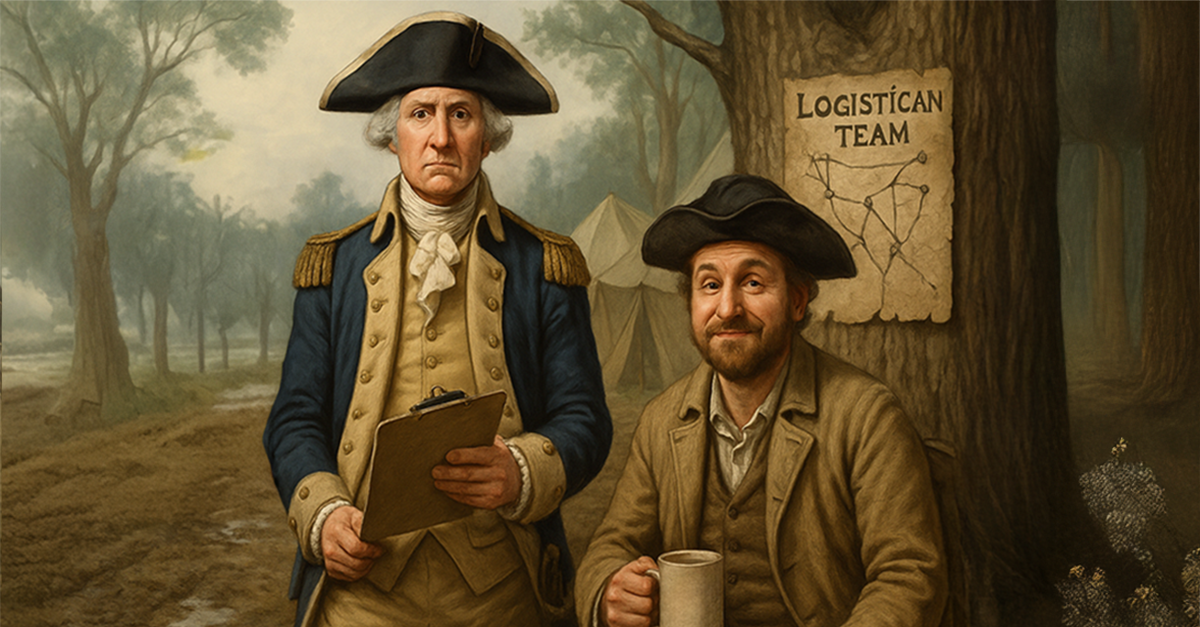
In 1776, George Washington didn’t have 88,000 “trusted carrier partners” to move his freight. He had muddy roads, freezing horses, and whatever wagons weren’t already broken. Independence was cool and all, but someone had to figure outow to get boots, food, and cannonballs from Point A to Point B with zero infrastructure and a whole lot of chaos.
Welcome to the first American supply chain.
When Washington took command of the Continental Army in 1775, he didn’t even have a country, let alone a logistics network. No TMS, no freight board, no playbook. Just a war to fight and zero supplies. He knew fast that you don’t win battles without food, powder, tents, and boots. So, Congress threw together the Office of the Quartermaster General and tapped Thomas Mifflin to figure it out. That move basically launched the first American supply chain.
Getting from A to B? Barely
Moving supplies in the 1770s was less "logistics strategy" and more "hope this wagon doesn’t snap in half." No maps, no fuel stops, just muddy trails and cold, miserable horses. Supplies sat miles away while soldiers gnawed on whatever they could find. Mifflin and his crew had to improvise, floating gear down rivers, dragging it with oxen, or straight up begging local farms for help. They even had to hide cargo so the British wouldn’t steal it… which is ironic, considering Mifflin may have been the industry’s first logistics scammer. That’s up for debate. Kind of.
It wasn’t ideal, but it was just enough to keep the army from collapsing every time winter hit.
Enter Nathanael Greene
After Mifflin’s questionable behavior, and a mysterious roll of extra cash, Washington handed the quartermaster reins to Nathanael Greene. Greene didn’t even want the job, but he took it anyway out of loyalty.
He reorganized everything: setting up regional supply depots so gear wasn’t stuck in one spot, cracking down on fraud, and pushing for cleaner contracts. Logistics began to support the war instead of dragging it down.
After stepping away from supply duties, Greene led the Southern Campaign, using hit-and-run tactics to wear the British out. Quietly and effectively, he proved something radical: logistics and strategy weren’t separate. They were the same fight.
Why it matters
This wasn’t just about moving stuff. It was the beginning of American logistics…messy, improvised, and absolutely essential. The Revolution wasn’t won by speeches and powdered wigs. It was won by people who figured out how to get food to starving troops and haul gunpowder through swamps with no roads, no maps, and no backup.
Before we were a country, we were a supply chain problem. Have a great holiday!